
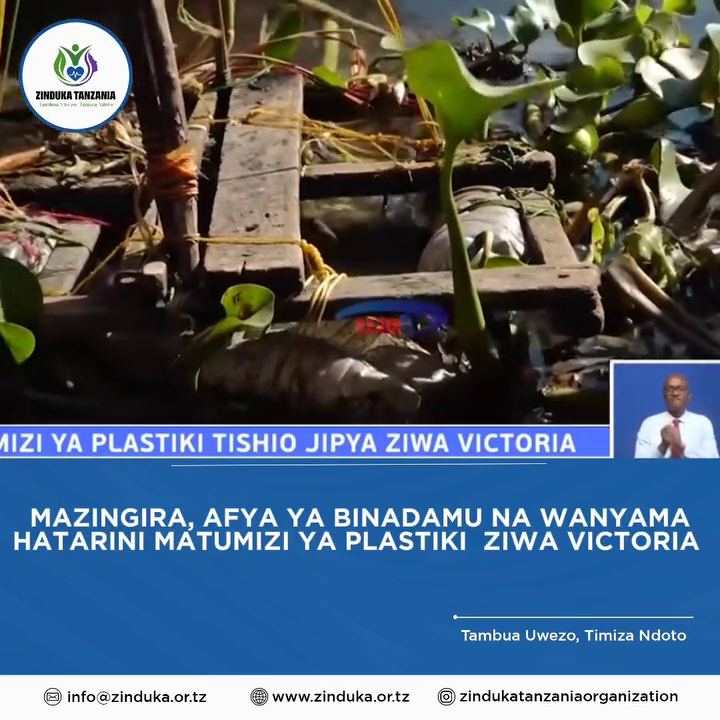
Worsening plastic pollution in Lake Victoria is causing a sharp decline in fish populations and jeopardizing the health of local communities. Academic studies reveal that up to 60% of all waste entering the lake consists of non-biodegradable plastics.
In addition to urban runoff carrying discarded containers into tributaries during rainstorms, local fishing practices contribute to the damage when discarded plastic floats, sand-filled bottles, and lost equipment are left behind in critical spawning zones. Consequently, research indicates that roughly 25% to 33% of fish in these waters now ingest hazardous microplastics.
Environmental advocates and grassroots organizations, including Zinduka Tanzania, are sounding the alarm on the hidden public health risks associated with the contamination.
The Chief Executive Director Sweetbert Mushi warns that microplastics ingested by aquatic organisms directly enter the human food chain through consumed fish, posing severe long-term biological risks.
In response to the crisis, local groups are pressing for continuous public awareness campaigns and stronger regional governance, while the government moves forward with plans for a specialized Lake Victoria Basin management authority to safeguard aquatic ecosystems and restore sustainable fish stocks.
SPECIAL THANKS (CREDIT): AZAM MEDIA, UTV